

Peptide therapy.
The future of medicine.
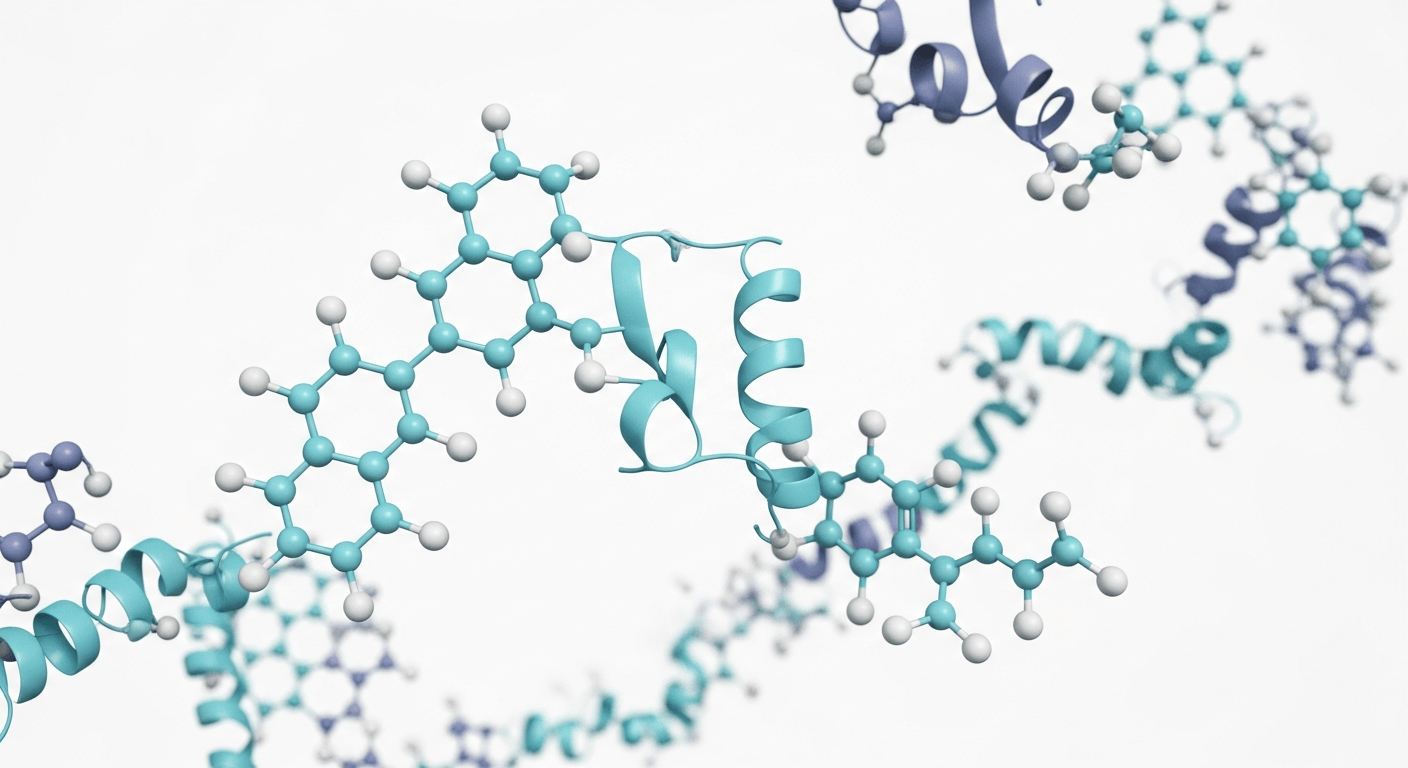
Peptides are short chains of amino acids that act as signaling molecules, regulating metabolism, immune function, tissue repair, and cellular health.
Physician-supervised protocols. Regulatory-compliant. Built for when the landscape opens.
Signaling molecules that speak your biology’s language.
Unlike small-molecule drugs that override biological systems, peptides work with the body’s existing signaling infrastructure. They bind to specific receptors and initiate precise physiological responses, from triggering tissue repair to modulating immune activity to optimizing mitochondrial function.
Because they are structurally similar to the signaling molecules the body already produces, peptides tend to have narrow, targeted mechanisms of action and a safety profile that reflects that specificity.
Signaling-Based
Peptides work through biological signaling pathways, producing targeted effects that work with the body's existing machinery.
Physiologically Familiar
Structurally analogous to the body's own signaling molecules, working with biology, not against it.
Longitudinally Trackable
Crimson's lab framework monitors the biomarkers relevant to peptide-targeted pathways over time.
Peptide protocols. Coming soon.
Each peptide below is categorized by its primary mechanism, not its target organ. Most act across multiple systems. That breadth is the point.
Sermorelin
GHRH Analog
- Endogenous GH pulse stimulation
- IGF-1 axis support
- Sleep quality & body composition
NAD+
NAD+ Precursor
- Mitochondrial energy metabolism
- Sirtuin activation & DNA repair
- NAD⁺/NADH ratio restoration
BPC-157
Body Protective Compound
- Tissue repair signaling
- Gut mucosal integrity
- Systemic anti-inflammatory activity
TB-500
Thymosin Beta-4 Fragment
- Actin-binding & cell migration
- Vascular & connective tissue repair
- Broad-spectrum regenerative activity
GHK-Cu
Copper Peptide
- Collagen & elastin synthesis
- Anti-inflammatory & antioxidant signaling
- Gene expression modulation
Semax
ACTH Analog
- BDNF upregulation
- Cognitive & memory research
- Neuroprotective signaling
Selank
Tuftsin Analog
- Inhibitory signaling modulation
- Stress & anxiety regulation
- Immune-neuro crosstalk
MOTS-C
Mitochondria-Derived Peptide
- Energy sensing & metabolic regulation
- Insulin sensitivity research
- Metabolic homeostasis signaling
KPV
α-MSH C-Terminal Fragment
- Inflammatory signaling regulation
- Mucosal & dermal inflammation
- Broad anti-inflammatory activity
DSIP
Delta Sleep-Inducing Peptide
- Sleep architecture research
- HPA axis modulation
- Stress-response signaling
Thymosin Alpha-1
Thymic Peptide
- T-cell & NK cell activation
- Innate & adaptive immune regulation
- Antiviral & antifungal signaling
Epitalon
Tetrapeptide Regulator
- Telomerase activation research
- Pineal melatonin regulation
- Chromatin remodeling activity
Kisspeptin-10
Gonadotropin-Releasing Peptide
- Hypothalamic signaling activation
- Gonadotropin & testosterone pulsatility
- Reproductive endocrine cascade
SS-31
Szeto-Schiller Peptide
- Inner mitochondrial membrane targeting
- Cardiolipin stabilization
- Reactive oxygen species reduction
Melanotan I
α-MSH Analog
- Melanocyte stimulation
- Pigmentation signaling
- Photoprotection research
PT-141
Bremelanotide
- Central arousal signaling
- Monoaminergic pathway modulation
- Hypothalamic neuroendocrine activity
Oxytocin
Hypothalamic Hormone
- Central bonding & trust signaling
- HPA axis & cortisol modulation
- Social & autonomic neuroscience research
Disciplined, physician-led. Regulatory-compliant.
There is growing public discussion about whether certain peptides may become more accessible in the future. But as of now, the FDA has not formally changed its position and most are not currently eligible for routine 503A compounding.
At Crimson, we take a disciplined, physician-led approach to care with rigorous standards for quality, safety, and compliance. Every treatment plan is individualized and built around what is right for the patient. As the regulatory landscape evolves, we will continue to monitor developments closely while staying focused on safe, evidence-informed care.
Peptide programs are coming soon.
Join the waitlist to be notified when peptide protocols become available through Crimson.